
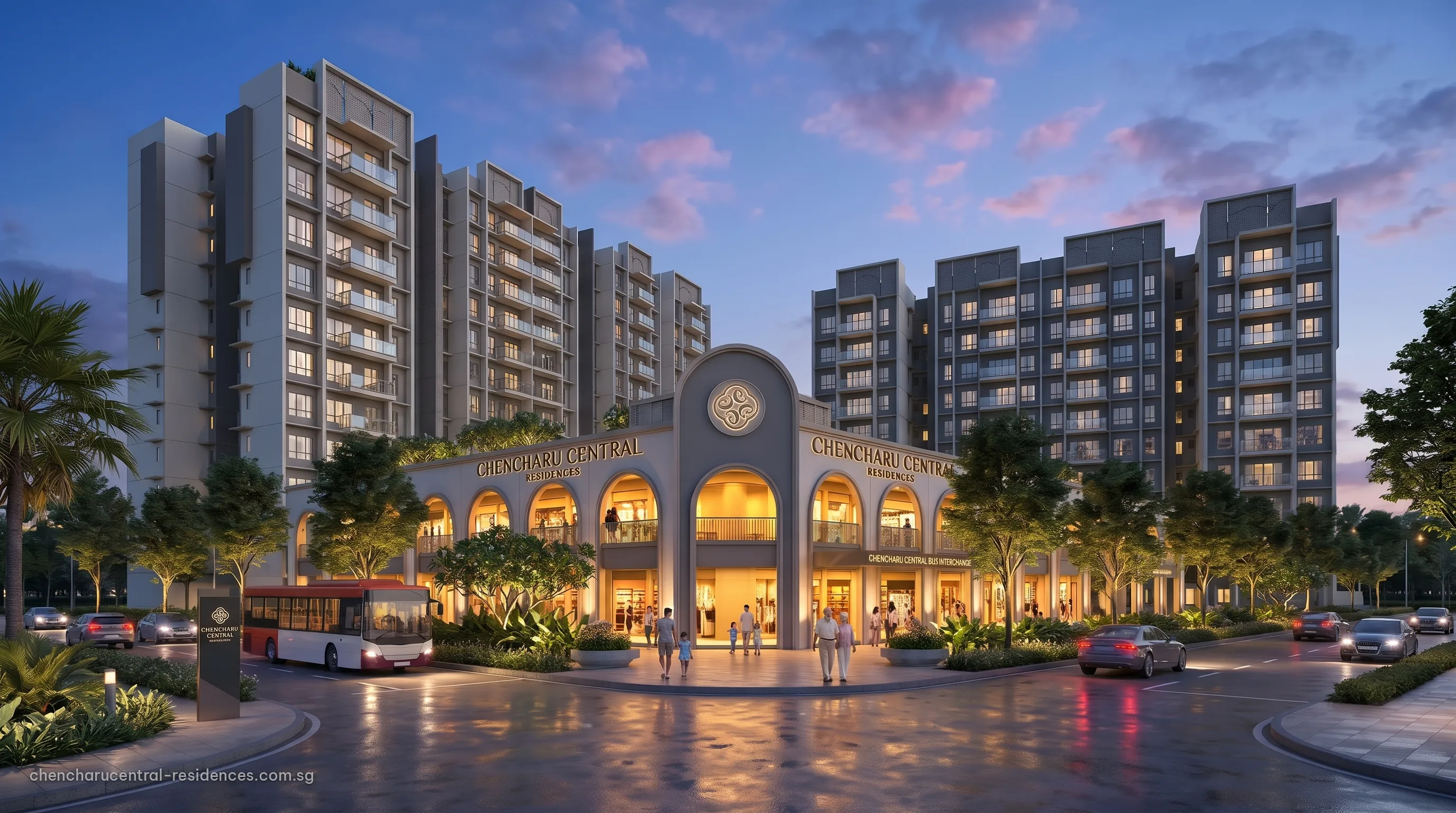
 Illustrative image
The Short Answer for Chencharu Central Residences
Anyone may buy. Chencharu Central Residences is a private condominium, not an executive condominium, so it carries no income ceiling, no citizenship requirement and no minimum occupation period. Singapore Citizens, Singapore Permanent Residents, foreigners and companies may all buy a home there. What changes from one buyer to the next is the stamp duty: Additional Buyer’s Stamp Duty depends on residency and on how many residential properties the buyer already owns.
That makes the question less about eligibility and more about cost. The rest of this article sets out who pays what, as at October 2026, and the points a household should settle before the developer releases the price list.
Chencharu Central Residences Is a Private Condominium
Chencharu Close was sold by HDB as a mixed commercial and residential site, and the homes planned on it are private condominium homes. That distinguishes Chencharu Central Residences from the executive condominiums sold elsewhere in the north, which are restricted in their early years to Singapore families who meet HDB’s income and ownership rules.
A private condominium has none of those conditions. A buyer does not need to form a family nucleus, does not face an income ceiling and is free to own other property, subject only to the stamp duty and loan rules that apply to every residential purchase in Singapore.
ABSD at Chencharu Central Residences by Buyer Profile
Additional Buyer’s Stamp Duty is charged on top of Buyer’s Stamp Duty. As at October 2026, the rates published by IRAS are: Singapore Citizens 0% on a first residential property, 20% on a second and 30% on a third or more; Singapore Permanent Residents 5%, 30% and 35%; foreigners 60% on any residential purchase; and entities, such as companies, 65%.
As an illustration only, on a figure of $1,500,000, which bears no relation to the price of any home at Chencharu Central Residences, Buyer’s Stamp Duty would be $44,600 for every buyer. A Singapore Citizen buying a first home would add nothing; a Permanent Resident buying a first home would add $75,000; and a foreigner would add $900,000. The stamp duty calculator runs the arithmetic for any figure and profile.
Free Trade Agreements and Joint Purchases at Chencharu Central Residences
Under Singapore’s free trade agreements, nationals and permanent residents of the United States, and nationals of Iceland, Liechtenstein, Norway and Switzerland, are treated as Singapore Citizens for ABSD. A national of one of those countries buying a first home at Chencharu Central Residences would therefore pay no ABSD.
Joint purchases combine profiles, and the higher applicable rate generally applies to the whole purchase. A married couple with at least one Singapore Citizen spouse buying their first home together may apply for remission. IRAS decides each case on the facts at the date of purchase, so a conveyancing lawyer should confirm the position before an option is exercised. The stamp duty page sets out the tables.
Financing for Each Buyer at Chencharu Central Residences
The MAS loan rules apply to every buyer. A borrower with no outstanding housing loan may borrow up to 75% of the price, a borrower with one outstanding loan 45% and a borrower with two or more 35%, with lower limits where the tenure exceeds 30 years or the loan runs past age 65. All monthly debt repayments must stay within 55% of gross income, with the new loan tested at a rate of at least 4%.
Singapore Citizens and Permanent Residents may use CPF Ordinary Account savings towards the price within CPF rules; foreigners pay their share in cash. The housing loan page explains the limits, and the TDSR calculator estimates the loan an income supports.
Company and Trust Purchases at Chencharu Central Residences
Buying through a company or a trust is possible, but it is rarely the cheaper route for a home. Entities pay ABSD of 65% on any residential purchase, and a company borrowing to buy a home is assessed on the company’s own finances rather than on the TDSR of an individual. Most households therefore buy in their own names.
Where several people buy together, each buyer’s profile matters. A Singapore Citizen and a foreign spouse buying together, for example, may qualify for remission as a married couple with at least one citizen spouse if neither owns another residential property, while a purchase by a citizen with a foreign business partner would attract the foreigner rate. The stamp duty page sets out the remission conditions, and a conveyancing lawyer can confirm how they apply before the option is exercised.
What to Settle Before the Chencharu Central Residences Price List
Because the duty depends on the buyer, the names on a purchase and the order of selling and buying are worth settling before the preview. An upgrader who still owns a home pays ABSD on a second property unless the conditions for a refund are met, and also borrows under the lower loan limit while the first loan is outstanding.
Registrants for Chencharu Central Residences receive the e-brochure, floor plans and price list as they are released, which leaves time to work through these questions with a bank and a lawyer. The showflat page takes preview registrations.
Talk to the Chencharu Central Residences Sales Concierge
The Sales Concierge sends the e-brochure, floor plans and price list for Chencharu Central Residences as they are released, and arranges a private preview viewing.